
The Quiet Arrival of New Masts:
A Missing Conversation with Communities
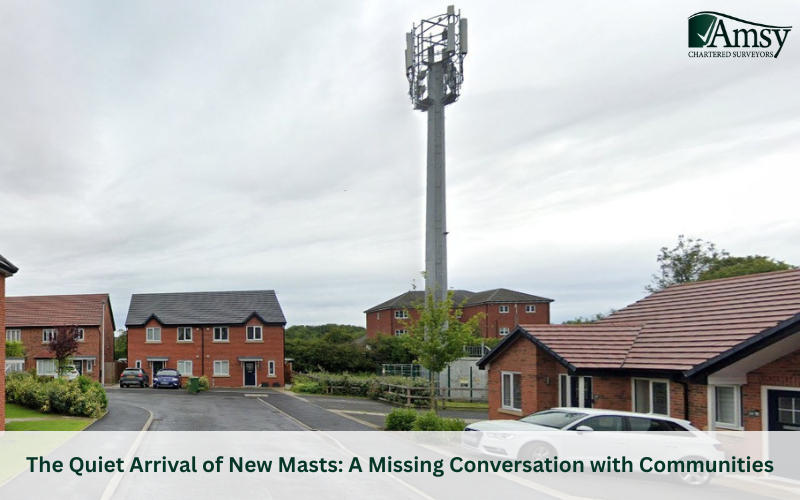
In many neighbourhoods, new telecom masts often pop up with just a formal planning notice to let people know they’re arriving. While operators are required to provide consultation, such as when submitting planning applications or providing official notices, real community engagement beyond that is often missing. This lack of real discussion can leave residents feeling caught off guard and disconnected from decisions that directly impact their areas.
For most households, the first sign of a new mast is a laminated sign on a streetlamp or an online planning notice that few people even see (who checks their local planning portal weekly for such things?). Important conversations about how it looks, if the site is suitable, environmental effects, or if other possible locations might be more appropriate, does not happen in open forums. As a result, concerns that could be sorted out early, like the height of the tower, clustering of equipment, or how it fits with the neighbourhood, often turn into opposition, appeals, or even vandalism of the mast, but we are not seeing this engagement, when really it should be required by default. Without open conversations, local landowners and tenants become gripped by feelings of being imposed upon, especially by “Site Providers” who are having Code Rights hoisted upon them with threats of litigation. Genuine engagement, like drop-in sessions, early notices, clear explanations about how sites are chosen, and giving residents a say, could really help bridge that gap.
We have all heard of situations where residents have gotten aggressive with engineers or surveyors on site and, despite having processes in place for those situations, it should be the case that these situations do not occur and such processes are not needed. Having personally had to deal with such situations myself, I recall one such incident I’m aware of ending with a resident driving their car into the partially built mast overnight, leading to the abandoning of the build. It was fortunate it did not happen when the engineers were carrying out work. This temporary mast had almost no planning engagement whatsoever, as it was being deployed under emergency planning powers, and the first the local residents knew about the mast was when the trucks drove up to start build works. Sneaking masts into being is only making dangerous situations (like the above) on site worse, and as we all know, safety should come first in everything. I feel early conversation when installing new masts, and not just with the owner/occupier of the land such an installation is being deployed upon, is key to reducing hostility with local residents and providing a safer environment for people in our industry.
As digital infrastructure keeps growing, the challenge the industry faces isn’t just about building better networks to meet quotas, but should also about building better relationships with the communities that host them. Real consultation isn’t just good practice, it’s crucial for earning public trust and ensuring long-term acceptance.